
Fayetteville N11 Phone Codes
Short service codes matter because they bypass a normal ten-digit directory lookup. In Fayetteville, the most important split is between emergency dispatch, crisis help, human-service referral, city-service routing, carrier help, relay service, traffic information, and utility marking. These codes do not all reach local government. Some route to statewide or national systems, and some route to the caller's own telephone carrier.
Fayetteville should not be described as having a standard city 311 call center unless that line is separately verified. Local non-emergency city-service routing is better stated as FayFixIt / 1FAY, with 910-433-1FAY converting to 910-433-1329. That is useful for trash, public-services, and other city issues, but it is not a substitute for 911.
| N11 code | Use in Fayetteville and North Carolina | Important limit |
|---|---|---|
| 211 | NC 211 and United Way referrals for food, shelter, rent help, utilities, transportation, disaster resources, and health or family services. | Referral service, not emergency dispatch. |
| 311 | Use FayFixIt / 1FAY for Fayetteville city-service routing unless a current 311 line is verified. | Not for urgent police, fire, or medical needs. |
| 411 | Carrier directory assistance for listed numbers. | Fees and availability vary by carrier. |
| 511 | Traffic and travel information, with NCDOT resources as the state fallback. | Not a local transit customer-service desk. |
| 611 | Repair or account help from the caller's own phone carrier. | Does not reach City of Fayetteville offices. |
| 711 | Telecommunications Relay Service for TTY and relay access. | Use relay access for eligible communication needs. |
| 811 | North Carolina 811 before excavation, digging, fence work, or utility marking. | Damaged utility lines or immediate danger still need the utility or 911. |
| 911 | Police, fire, EMS, crimes in progress, fire, serious injury, and life-safety emergencies. | Do not route emergencies through FayFixIt or 1FAY. |
| 988 | Suicide, mental-health, and substance-use crisis support by call, text, or chat. | Not a police dispatch number. |
The NC 211 search resource shows how the statewide referral system routes needs by service and location.
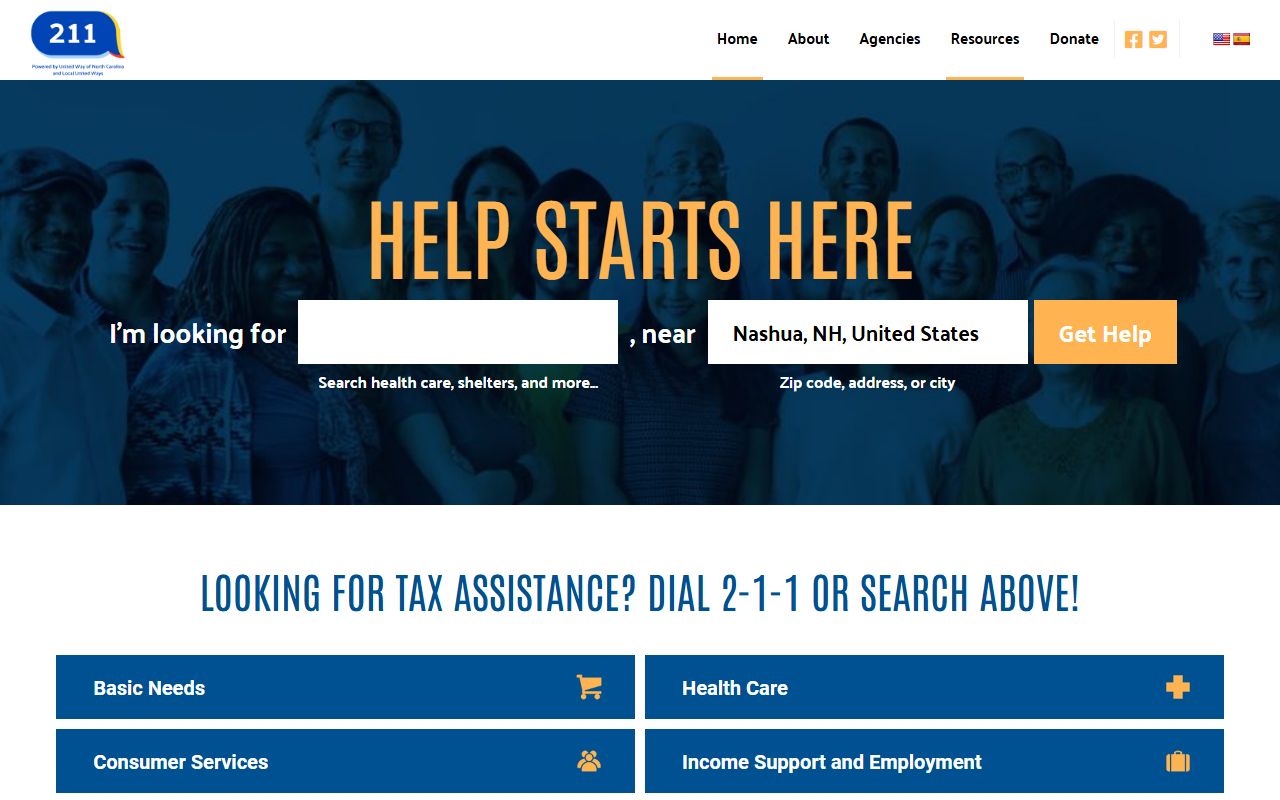
That makes 211 a practical service shortcut for Fayetteville residents who need help but do not need emergency dispatch.
Dialing Fayetteville Local Calls
Fayetteville follows the North American Numbering Plan. A standard number uses NPA-NXX-XXXX format: the NPA is the area code, the NXX is the central-office or prefix code, and the final four digits are the line number. Local calls require ten digits because the city is in an overlay area and because the 988 transition changed dialing in the 910 numbering plan area.
The 472 overlay did not move neighborhoods out of 910. It added numbering capacity over the same southeastern North Carolina geography. Existing 910 numbers stayed in place, and new local numbers can be assigned with 472. The result is simple for everyday calling: include the area code for local calls, even when both parties are in Fayetteville.
- For a local Fayetteville call, dial the full ten-digit number: area code, NXX prefix, and line number.
- For many landline long-distance calls, dial 1 plus the ten-digit number, but check the carrier plan if charges or prefixes are unclear.
- For mobile contacts, store U.S. numbers as +1 plus the ten-digit number so the entry works from more places.
- For an international call from a landline, dial 011, the destination country code, then the destination number.
- For a call from abroad into Fayetteville, use the caller's exit code, then 1, then the ten-digit local number.
Important: Seven-digit local dialing is no longer the Fayetteville rule; include the area code for local calls.
Star Phone Codes for Fayetteville
Vertical service codes are the star commands used to turn call features on or off. They are often tied to landline service, but some wireless or VoIP carriers support a subset. A Fayetteville caller should treat the table as a starting point and check the carrier's help page for activation, fees, and limits.
| Code | Common function | Fayetteville use note |
|---|---|---|
| *57 | Call trace | Often used after threatening or harassing calls; carrier and law-enforcement process varies. |
| *60 | Selective call block | Blocks specific callers where supported by the line. |
| *67 | Block caller ID per call | Dial before the destination number to hide outbound caller ID where allowed. |
| *69 | Last-call return | May call back the last incoming number; fees and support vary. |
| *70 | Disable call waiting per call | Used on supported lines before fax, dial-up, or calls that should not be interrupted. |
| *72 | Activate call forwarding | Carrier-specific forwarding setup. |
| *73 | Cancel call forwarding | Carrier-specific cancellation. |
| *77 | Anonymous call rejection | Rejects private or anonymous calls where the feature is available. |
| *82 | Unblock caller ID per call | Sends caller ID from a line that normally blocks it. |
The FTC Do Not Call Registry is a separate reporting and registration tool for unwanted sales calls, not a star-command feature.
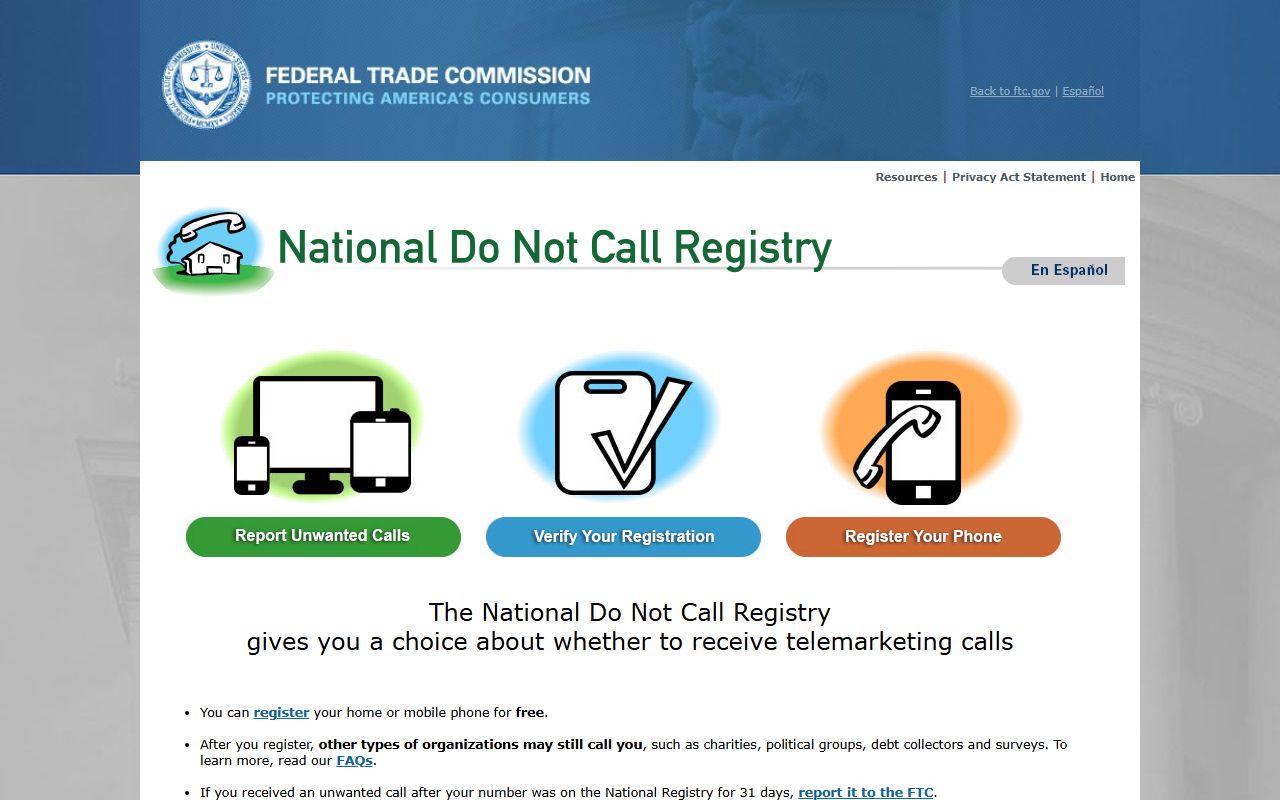
That distinction matters because a star command may affect one line, while a complaint or registry entry creates a consumer-protection record.
Area Codes as Fayetteville Phone Codes
Area codes are one type of code, but they should not dominate the dialing picture. Fayetteville's local calling-code set is the 910 and 472 overlay. 910 is the older and more familiar southeastern North Carolina code, while 472 is the overlay for the same geography. A 472 number can be just as local as a 910 number.
Downtown Fayetteville, Haymount, Terry Sanford, Westover, Seventy-First, Cliffdale, College Lakes, Ramsey Street, Skibo Road, Raeford Road, Hope Mills, Spring Lake, Eastover, Stedman, Vander, Rockfish, and Gray's Creek-area communities should be treated as overlay geography rather than separate local code zones. More geographic detail belongs with Fayetteville phone area codes.
| Calling code | Fayetteville meaning | Dialing effect |
|---|---|---|
| 910 | Historical southeastern North Carolina area code serving Fayetteville and Cumberland County. | Dial ten digits for local calls. |
| 472 | Overlay for the same 910 geography, with new assignments beginning October 7, 2022. | Dial ten digits for local calls. |
Fayetteville PWC illustrates the practical side of local dialing; its electric outage map gives utility context separate from city hall.
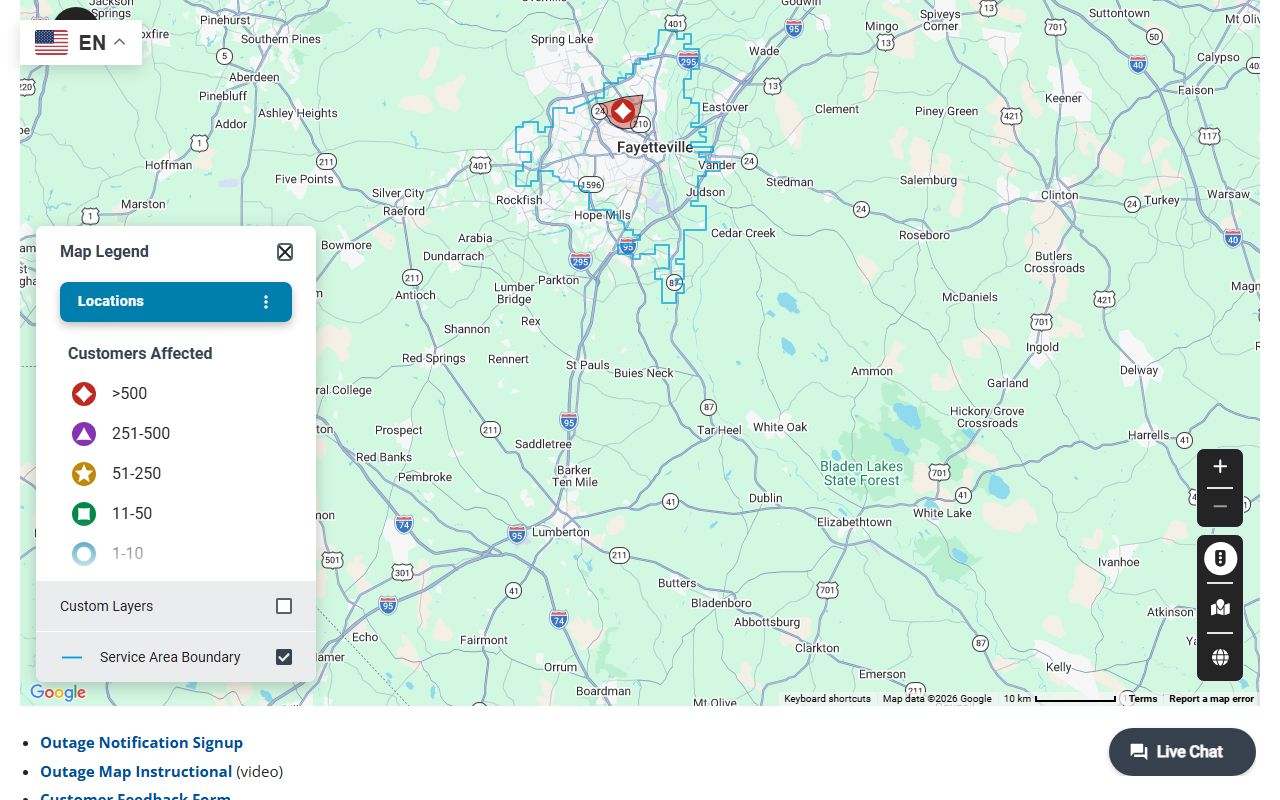
PWC calls use the same ten-digit local structure, but utility emergencies should be routed to the utility rather than a generic directory search.
Fayetteville NXX Prefix Codes
The NXX is the three digits after the area code. In 910-433-1329, 433 is the NXX. Prefixes once mapped more tightly to central offices and rate centers, and they still help identify original numbering assignments in databases. They do not prove the current carrier or subscriber because number portability lets a line move among landline, wireless, and VoIP providers.
Local public numbers show useful patterns. City services, FAST, stormwater, and NCDEQ Fayetteville examples use 433. PWC and many library or school numbers use 483. Cumberland County Schools and FTCC use many 678 numbers. Fayetteville State University uses 672, Methodist University uses 630, Highway Patrol examples use 486, and newer institutional numbers include 500. Treat these as clues, not proof.
FAST transit shows why prefixes should be read with service context. The FAST customer support page separates fixed-route support from paratransit support.
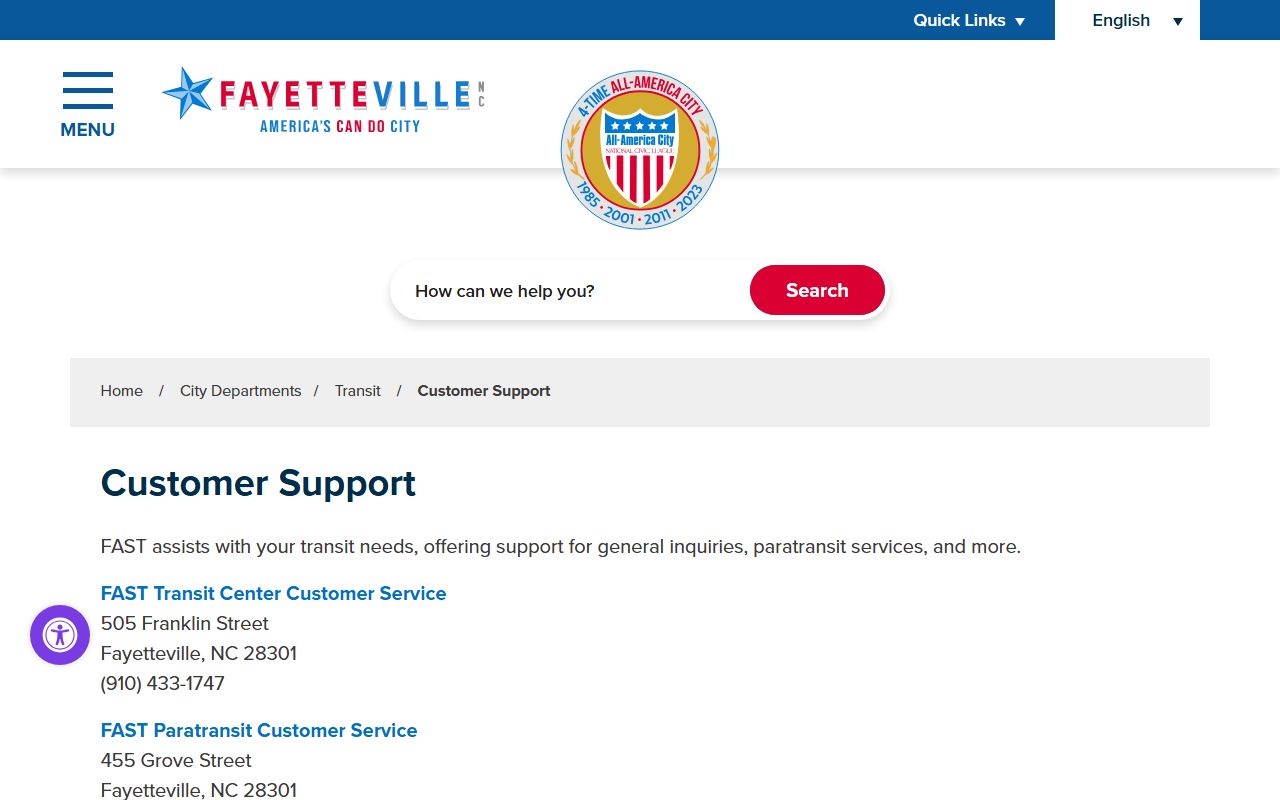
That kind of official source is stronger than guessing from a prefix alone.
Fayetteville Utility Service Codes
Utility-related dialing uses a mix of local ten-digit numbers and short codes. PWC handles electric, water, and sewer outage or emergency reporting for much of the city area. Piedmont Natural Gas has separate gas leak routing. North Carolina 811 is the call-before-you-dig system for excavation and utility marking, and it should be used before digging rather than after a line is hit.
North Carolina 811 research lists 811 and 800-632-4949, with three working days' advance notice and marks valid for 28 calendar days. If a damaged line creates immediate danger, call the utility or 911 as appropriate. Billing disputes or telecom complaints may later go to the North Carolina Utilities Commission or Public Staff, but those offices are not outage dispatch centers.
The North Carolina 811 state page gives the statewide call-before-you-dig context for Fayetteville projects.
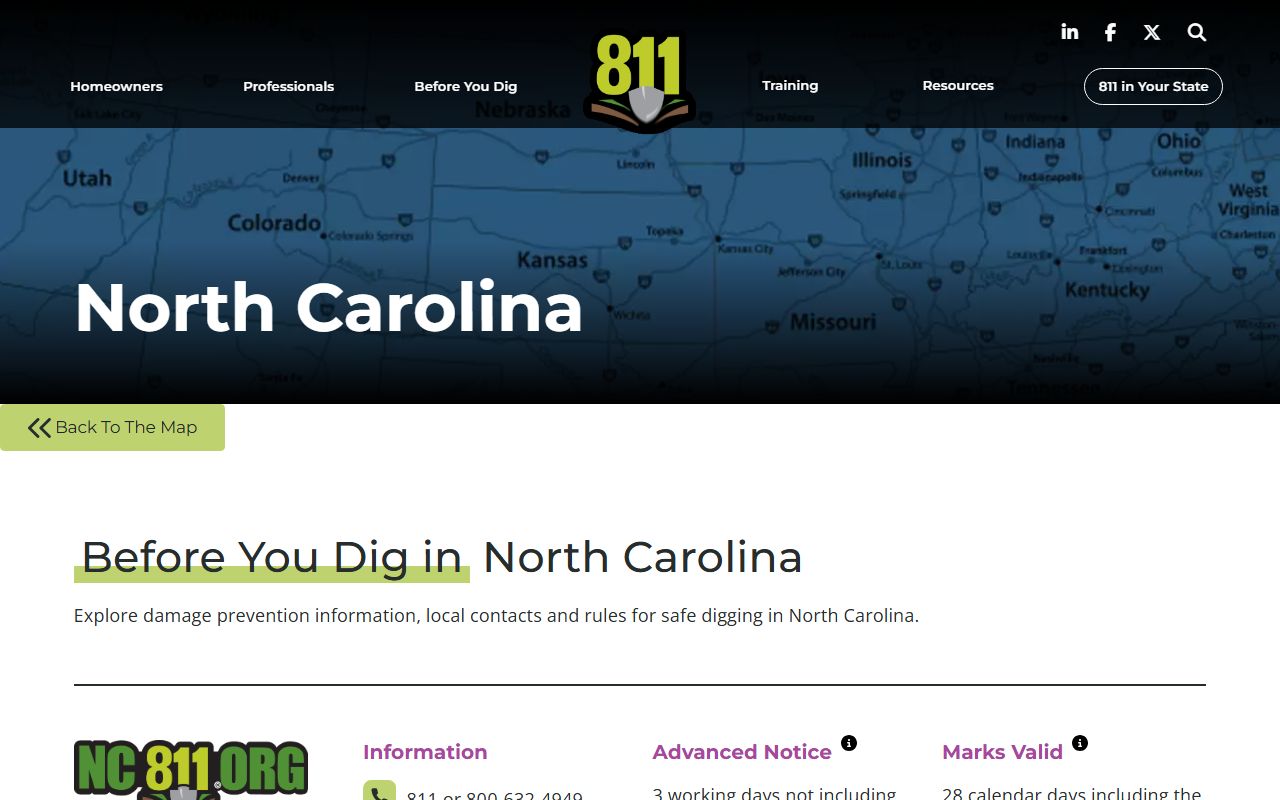
That source reinforces the key rule: use 811 before excavation, and use emergency channels for immediate hazards.
Fayetteville Numbering Terms
Numbering terms are easy to mix up because a short code, area code, prefix, and toll-free prefix can all be called codes in casual speech. These definitions keep the dialing and lookup pieces separate.
- NPA
- Numbering Plan Area, the three-digit area code at the start of a North American number.
- NXX
- The central-office or prefix code, shown as the three digits after the area code.
- N11
- A three-digit service shortcut such as 211, 711, 811, 911, or 988.
- Vertical service code
- A star command that turns a calling feature on or off for a line.
- Toll-free prefix
- A prefix such as 800 or 888 that routes billing to the called party.
- STIR/SHAKEN
- A caller-ID authentication framework that helps carriers assess spoofing risk.
Fayetteville Codes and Spam Labels
Caller ID can be spoofed, so a local-looking 910 or 472 number does not prove that the caller is in Fayetteville. The opposite is also true: an unfamiliar 472 number can be a valid local assignment because 472 overlays 910. STIR/SHAKEN and carrier spam labels help assess risk, but they do not prove that a caller is legitimate or fraudulent.
Use official verification for claims involving the City of Fayetteville, Cumberland County, CCS, FSU, FTCC, Methodist, PWC, police, sheriff, courts, DSS, utilities, banks, or health care. Call the published office number from the agency's website, not the number sent in a threatening text or voicemail. For a broader lookup workflow, use the Fayetteville phone numbers reference.
The FCC's call authentication reference explains STIR/SHAKEN as a spoofing control, while Do Not Call handles unwanted-call registration and reporting.
Note: Spam labels are risk signals, not legal findings, and spoofed caller ID can make a scam appear local.
Verify a Fayetteville Code
Authoritative lookup depends on the type of code. For area codes and central-office assignments, use NANPA resources. For federal area-code basics, FCC references explain the national framework. For North Carolina relief proceedings and telecom complaint routing, the North Carolina Utilities Commission is the state-level authority. For local service numbers, use the relevant Fayetteville, county, school, utility, or agency page.
NANPA Numbering Data
Area-code maps and central-office code assignment reports.
North Carolina Utility Regulation
State utility and telecom authority for relief and complaint context.